
What is the difference between junk removal and dumpster rental?
With full-service junk removal, a crew carries out unwanted furniture and other agreed items, loads them, and hauls them away. With a standard roll-off rental, a company delivers a container and collects it later; you arrange the loading. Confirm the service description, because some companies also offer separate loading options.
A crew can make sense when the unwanted items are already identified and carrying them out is the main obstacle. A rental can be useful when you can do the lifting, have a suitable placement area, and want several days to sort or generate debris.
If you still need to open every box, build sorting time into the plan before booking either service. For a garage cleanout, mark what stays and separate the removal pile from tools, keepsakes, and supplies you still use.
Is junk removal cheaper than dumpster rental in Seattle?
Neither option is always cheaper. Compare the complete cost for the same accepted items and the loading help you need. A rental’s starting price and a crew’s minimum pickup price cover different services.
Ask a dumpster provider for the container size, included weight, rental period, delivery and collection charges, extra-day rate, overweight rate, and material restrictions. Ask whether taxes, permits, and any location-specific charges are included.
A worked example shows why that matters. On November 10, 2026, Cascade Container and Recycling’s published pricing lists a 15-yard rental starting at $650, including 2,000 pounds, with additional weight at $0.11 per pound and extra days at $20 each. Hypothetical use of those posted terms: 500 pounds over the allowance and two extra days would add $55 + $40, bringing the subtotal to $745 before taxes, other applicable charges, or discounts. That is an illustration, not a quote or a Seattle market average; confirm current terms and acceptance of your materials.
For comparison, JC Junk Solutions’ standard household pickups start at $119 and reach $819 for a full, approximately 25-cubic-yard truck. Check current prices and use the load calculator to plan your pickup. Partial loads follow the load tiers. Mattresses carry a $30 surcharge each, refrigerators and AC units $50, and TVs $20. Dense debris, demolition, and unusual access need individual assessment.
Do I need a permit for a dumpster in Seattle?
Yes, if the dumpster will occupy Seattle’s public right-of-way. SDOT requires a Street Use permit before delivery. Its residential guidance also calls for a Temporary No Parking permit and public notices on No Parking easels at least 72 hours before placement to reserve curb space. Construction projects can require a different permit.
A container needs more than an empty rectangle on the ground. Ask the rental company about the delivery truck’s access, overhead clearance, container door space, and protection for the surface underneath. Confirm property-owner or building approval when needed.
Ask who handles those arrangements before choosing a delivery date. A private driveway and curbside parking are different situations, and Seattle’s process should not be assumed to apply in Auburn or another city. Crew pickup also needs lawful loading access; it does not make a blocked alley or reserved parking space available.
Which option fits a move-out or a gradual garage cleanout?
A rental can fit a gradual cleanout if you can load it and have suitable space; a crew can fit a ready-to-go pile that you need help carrying. Consider two hypothetical projects. In a second-floor apartment cleanout, a sofa, dresser, and several boxes need to leave by Friday. Renting a container would still leave the carrying, building access, and loading to arrange. A crew quote should account for stairs, any disassembly, the loading location, and the deadline.
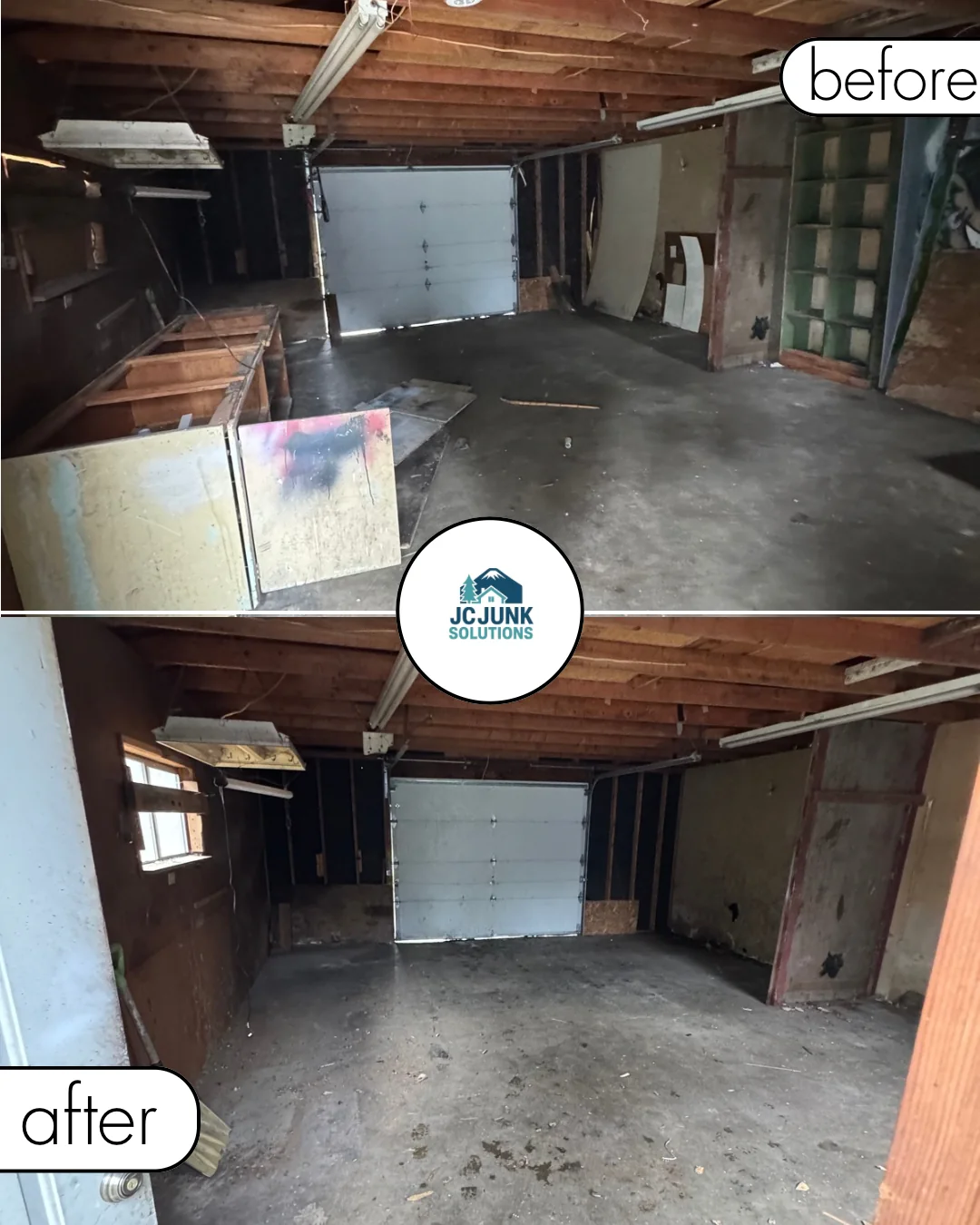
In the second, you are clearing a detached garage a little each evening. You have suitable driveway space, can load safely, and know which materials the provider accepts. A rental may suit that pace better. Alternatively, sort first and request one pickup when the removal pile is complete.
Can paint, chemicals, and heavy debris go in either load?
Not automatically: acceptance depends on the material and the provider. Identify paint, chemicals, batteries, refrigerant appliances, and unknown containers before booking. Keep them separate while you confirm the appropriate route.
For King County residents, the county offers household hazardous-waste collection without a fee or appointment. Check accepted products, quantity limits, and the selected location’s hours before traveling; that does not mean every special item belongs there.
Concrete, tile, soil, and other heavy renovation materials also change the comparison. A container’s available volume is not its weight allowance, and a household hauling estimate is not a construction debris removal assessment. List those materials separately.
What should I send to get a cleanout quote?
Send both providers the same information:
- What is going: an item list and wide photos, with dense or special materials identified.
- Where it is: the floor, stairs, gates, carry distance, and available loading or container space.
- Who loads: you, hired help, or the removal crew—and whether disassembly is needed.
- When it must finish: your sorting time, collection deadline, and building restrictions.
- What the total covers: accepted materials, disposal, labor, applicable fees, and what would change the price.
For a crew-assisted pickup, request a JC Junk Solutions cleanout quote with your item list, location, and access details. Share photos of the items and the route out so we can assess the work. Compare that scope with the rental option before deciding.